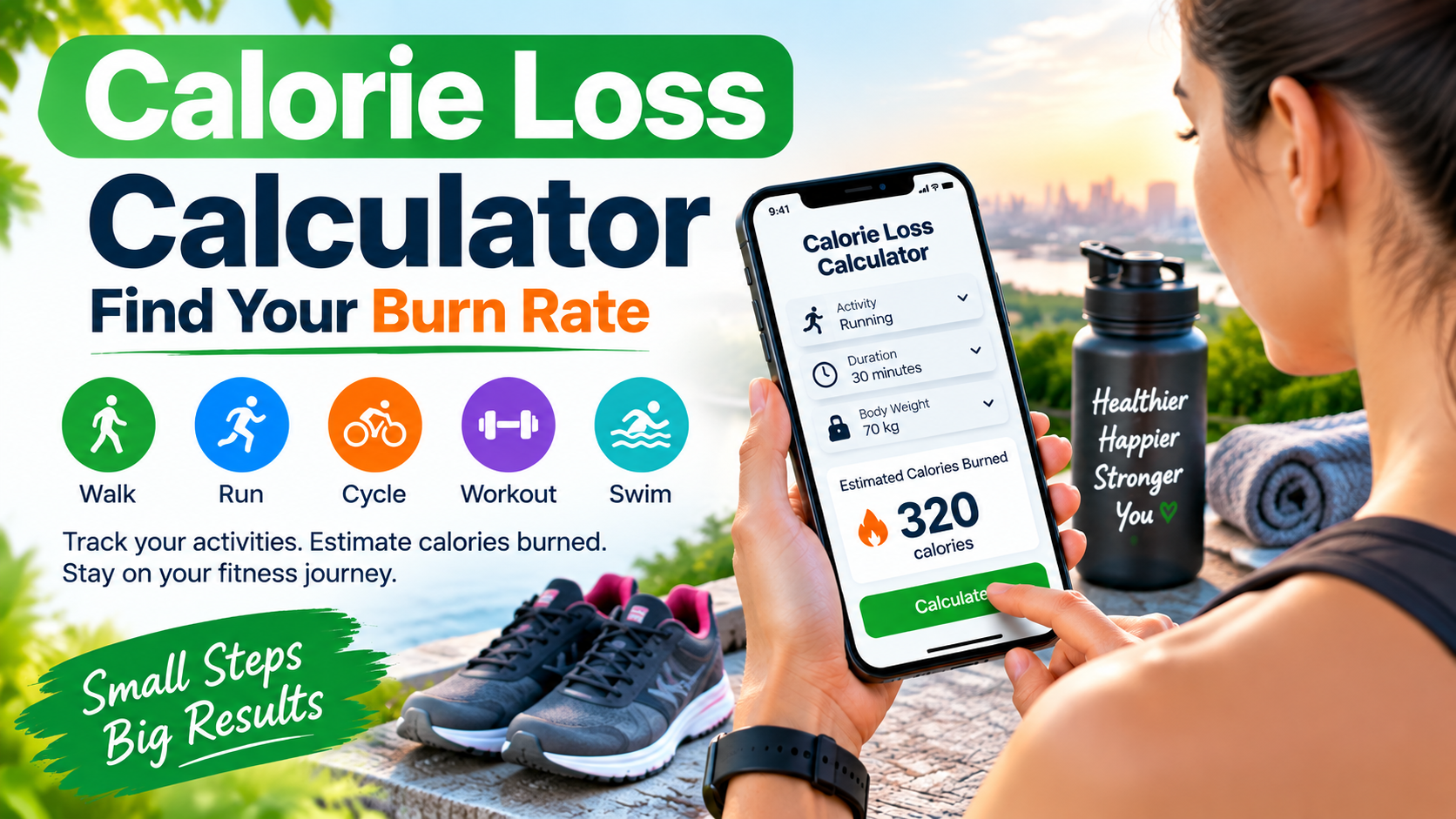
Need a Calorie Loss Calculator? Try It Now
A calorie loss calculator helps estimate how many calories your body can burn during exercise and daily activities. Instead of using a general workout chart, this tool considers important details such as body weight, activity type, and workout duration to provide a more personalized estimate. The number of calories burned is different for every person. The same 30-minute workout can produce different results because body size, exercise intensity, movement efficiency, and fitness level all influence energy expenditure. A calorie loss calculator is not a medical measurement, but it is a useful tool for understanding activity levels and planning fitness routines.
Try it free now: Calorie Burn Calculator
What Is a Calorie Burn Calculator?
A calorie burn calculator is an online fitness tool that estimates energy used during physical activity. Users usually enter information such as body weight, exercise type, duration, and intensity. Activities like walking, running, cycling, swimming, strength training, and household tasks require different amounts of energy. By
comparing these activities, users can better understand how movement contributes to daily calorie expenditure. A calorie loss calculator makes this process easier by providing quick estimates without requiring complicated calculations.
How Does a Calorie Burn Calculator Work?
Most calorie calculators use MET (Metabolic Equivalent of Task) values. MET measures how much energy an activity requires compared with resting. A simplified calculation considers activity intensity, body weight, and workout duration. This means two people completing the same exercise may receive different results. For example, a heavier person may burn more calories walking the same distance as a lighter person. Increasing speed, resistance, or workout duration can also increase calorie expenditure.
Why Body Weight Changes Calories Burned
Body weight is one of the most important factors affecting energy use. Moving a larger body generally requires more effort, which can result in higher calorie expenditure during the same activity. However, calorie numbers should not be used to compare people. Fitness progress depends on consistency, health goals, strength improvements, endurance, and overall lifestyle habits.
Activities You Can Track
A useful calculator should support multiple activities. Walking estimates may depend on speed and distance, while running results may change based on pace and terrain. Cycling depends on resistance and intensity.
Swimming depends on stroke type and effort. Strength training depends on workout structure, exercises performed, and rest periods. Using a calorie loss calculator across different activities helps users compare routines and choose exercises that match their goals.
How to Use Calorie Estimates Effectively
Calorie estimates are most useful when viewed as part of a bigger fitness plan. First, focus on trends instead of one workout result. Weekly activity patterns provide better insight than a single calorie number. Second, use estimates for planning. A person can compare walking, cycling, or strength training to create a balanced routine. Third, combine exercise information with nutrition awareness, recovery, sleep, and consistency. Burning calories is only one part of maintaining a healthy lifestyle. A calorie loss calculator should be used as a guide rather than the only measure of progress.
Can It Help With Weight Goals?
A calorie calculator can support weight-related goals by helping users understand energy expenditure. However, weight changes depend on many factors, including food intake, metabolism, sleep, and daily habits. A tool can show estimated calories burned through activity, but it cannot predict exact weight changes. Sustainable progress usually comes from realistic routines that people can maintain over time.
Limitations of Calorie Calculators
Although helpful, calorie calculators have limitations. They cannot perfectly measure individual metabolism, exact exercise intensity, muscle efficiency, hormonal differences, or medical factors. Fitness tools provide estimates based on available information. Users should treat these numbers as guidance rather than exact scientific measurements.
Conclusion
A calorie loss calculator is a simple way to understand how different activities contribute to daily energy expenditure. By considering body weight, activity type, and duration, it provides a more personalized estimate than generic workout charts. For people building healthier routines, these estimates can support workout planning, activity comparisons, and long-term tracking. Try the FreeWWW Calorie Burn Calc tool to estimate calories burned across different activities and make your fitness planning easier.
Try the free Calorie Burn Calculator tool to estimate calories burned across different activities and make your workouts easier to understand.
Frequently Asked Questions
1. What is a calorie burn calculator?
Answer: A calorie burn calculator estimates how many calories your body uses during exercise or activities. It typically considers factors such as your weight, activity type, and workout duration to provide a personalized estimate.
2. How accurate is a calorie burn calculator?
Answer: A calorie burn calculator provides an estimate rather than an exact measurement. Accuracy depends on the information entered and cannot fully account for individual metabolism, fitness level, or exercise efficiency.
3. Does body weight affect calories burned during exercise?
Answer: Yes. Body weight affects energy expenditure because moving a heavier body generally requires more energy. Two people performing the same activity for the same amount of time may burn different calories.
4. Can I use a calorie burn calculator for weight loss?
Answer: Yes, it can help you understand activity levels, but weight loss depends on overall energy balance, including food intake, exercise, sleep, and lifestyle habits.
5. How many calories does a 30-minute workout burn?
Answer: The number varies based on the activity, intensity, and individual factors. A light walk and an intense workout can produce very different calorie estimates over the same time period.
6. What is MET in a calorie burn calculator?
Answer: MET stands for Metabolic Equivalent of Task. It measures how much energy an activity requires compared with resting and is commonly used to estimate exercise calorie expenditure.
7. Can I calculate calories burned from daily activities?
Answer: Yes. Many calorie calculators include activities beyond workouts, such as walking, chores, and other forms of movement.
8. What is the difference between a calorie burn calculator and a calorie intake calculator?
Answer: A calorie burn calculator estimates energy used through activity, while a calorie intake calculator focuses on calories consumed through food and drinks.
For general nutrition information, users can also review guidance from the Centers for Disease Control and Prevention healthy weight resources.
9. Should I track calories burned every day?
Answer: Daily tracking can help some people understand activity patterns, but long-term trends are usually more meaningful than focusing on one day’s estimate.
10. Where can I learn more about physical activity recommendations?
Answer: Reliable guidance on physical activity levels is available from organizations such as the World Health Organization physical activity guidelines.