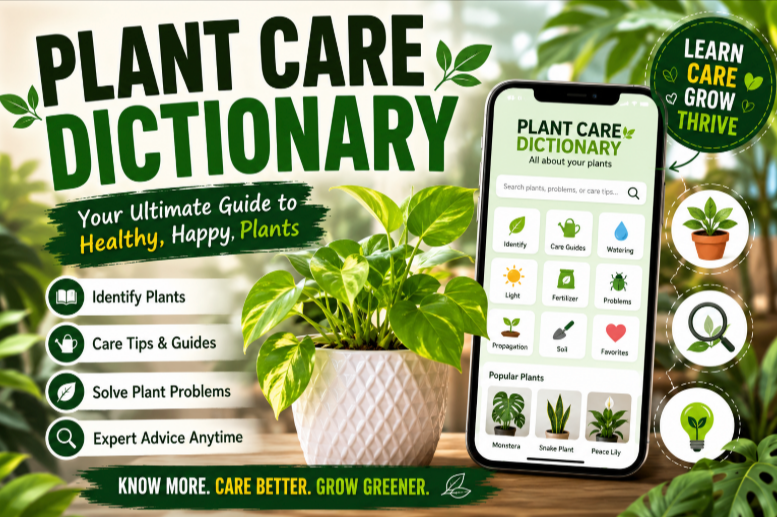
Plant Care Dictionary: Your Free Guide to Healthy Plants
The Plant Care Dictionary is your free online guide to keeping plants healthy, whether you’re a beginner or an experienced gardener. It includes detailed guidance on watering, sunlight, soil, fertilization, pruning, and common maintenance tips. Using this tool can dramatically improve plant health and longevity.
Why a Plant Care Dictionary Matters
Many plant owners struggle with keeping their greenery healthy due to inconsistent watering, incorrect sunlight exposure, or improper fertilization. A reliable, organized plant care reference saves time, reduces plant loss, and improves growth outcomes.
A plant care dictionary provides science-backed guidance for every plant species, helping both beginners and experienced gardeners understand specific needs. For example, a succulent may need infrequent watering and bright indirect light, while a fern thrives in humid, low-light environments. This clarity prevents mistakes and boosts confidence.
Features of the Plant Care Dictionary
1. Comprehensive Plant Profiles
The Plant Care Dictionary includes individual profiles for a wide range of indoor and outdoor plants. Every plant profile shows its scientific and common names, sunlight needs, watering schedule, soil type, fertilization advice, pruning guidance, and common pests, all in one easy-to-follow format.
This structured format ensures that plant owners can find accurate, actionable guidance quickly.
2. Easy Navigation and Search
Users can search by plant name or browse categories like indoor plants, outdoor plants, succulents, and flowering plants. Filters for climate, care difficulty, and plant type make it easy to locate relevant guidance.
3. Practical Maintenance Tips
Beyond basic requirements, the dictionary offers practical advice such as:
- How to check soil moisture without overwatering
- Signs of nutrient deficiencies in leaves
- Seasonal care adjustments
- Pest prevention and safe treatment methods
This combination of theory and practical tips is ideal for hands-on gardeners.
4. Free and Accessible
Unlike premium gardening apps or subscriptions, the Plant Care Dictionary is completely free. Users can access it from desktops, tablets, or smartphones without creating accounts or paying fees.
How to Use the Plant Care Dictionary Effectively
Step 1: Identify Your Plant
Use the common or scientific name to locate the profile. If unsure, browse visual guides or categories until the correct plant is found.
Step 2: Review Light and Water Requirements
Check recommended sunlight hours and watering frequency. For example, a ZZ plant tolerates low light and minimal watering, while a Fiddle Leaf Fig prefers bright indirect light and consistent moisture.
Step 3: Understand Soil and Fertilizer Needs
The tool lists soil type and fertilizer schedule. Matching soil and nutrient type ensures optimal growth and prevents issues like root rot or stunted growth.
Step 4: Check Seasonal Care
Some plants have seasonal adjustments, like reduced watering in winter or increased humidity in dry months. Following these guidelines keeps plants thriving year-round.
Step 5: Learn Pest and Disease Prevention
Profiles include tips for spotting pests early, preventing fungal infections, and safe treatment options. Early intervention prevents major damage.
Benefits for Different Users
Beginners
The dictionary provides clear, step-by-step care instructions for popular indoor and outdoor plants. It eliminates guesswork and builds confidence.
Experienced Gardeners
Advanced gardeners benefit from specific fertilization schedules, propagation techniques, and pest management strategies.
Educators and Students
Teachers can use the tool as a reference for biology or horticulture classes, providing examples of plant physiology, soil science, and ecosystem interactions.
Why Using a Plant Care Dictionary Improves Success
- Reduces Plant Mortality: Accurate guidance prevents common mistakes like overwatering or incorrect light exposure.
- Saves Time: Quickly find specific care instructions without consulting multiple books or sources.
- Supports Healthy Growth: Understanding species-specific needs leads to lush, resilient plants.
- Encourages Sustainability: Proper care reduces waste, avoids unnecessary plant loss, and supports eco-friendly gardening.
Tips for Maximizing the Tool
- Bookmark frequently used plant profiles.
- Take notes for seasonal adjustments or specific plant quirks.
- Pair the dictionary with a watering schedule app or garden journal.
- Share tips with gardening communities for collective learning.
Conclusion
The Plant Care Dictionary is a powerful free resource for anyone seeking healthy, thriving plants. By providing detailed profiles, maintenance tips, and accessible guidance, it equips gardeners with the knowledge they need to care for indoor and outdoor plants successfully.
Start using the Plant Care Dictionary today and give your plants the care they deserve!
FAQs
What is the Plant Care Dictionary?
A free online tool providing care instructions for indoor and outdoor plants, including watering, sunlight, and soil requirements.
Who can use it?
Beginners, hobbyists, students, teachers, and experienced gardeners.
Does it include indoor plants?
Yes, indoor plants are categorized with detailed care instructions.
Can I find plant identification tips?
Yes, it allows search by common or scientific name and provides visual guidance.
Does it include outdoor plants?
Yes, profiles for flowers, shrubs, trees, and vegetables are included.
What kind of care info does it provide?
Watering frequency, sunlight exposure, soil type, fertilization, pruning, propagation, pests, and disease tips.
Is it free to use?
Yes, the tool is completely free and accessible on desktop and mobile.
How can it help beginners?
It eliminates guesswork, provides step-by-step instructions, and builds confidence for indoor and outdoor gardening.
Are there educational uses?
Yes, it is ideal for classroom teaching, horticulture assignments, and biology projects.
Where else can I learn about plant care?
Reliable resources include the Royal Horticultural Society.