Temperature Converter: Convert Celsius, Fahrenheit & More
Need to convert a temperature quickly? A temperature converter turns a value from one temperature scale into another without requiring you to calculate the formula manually.
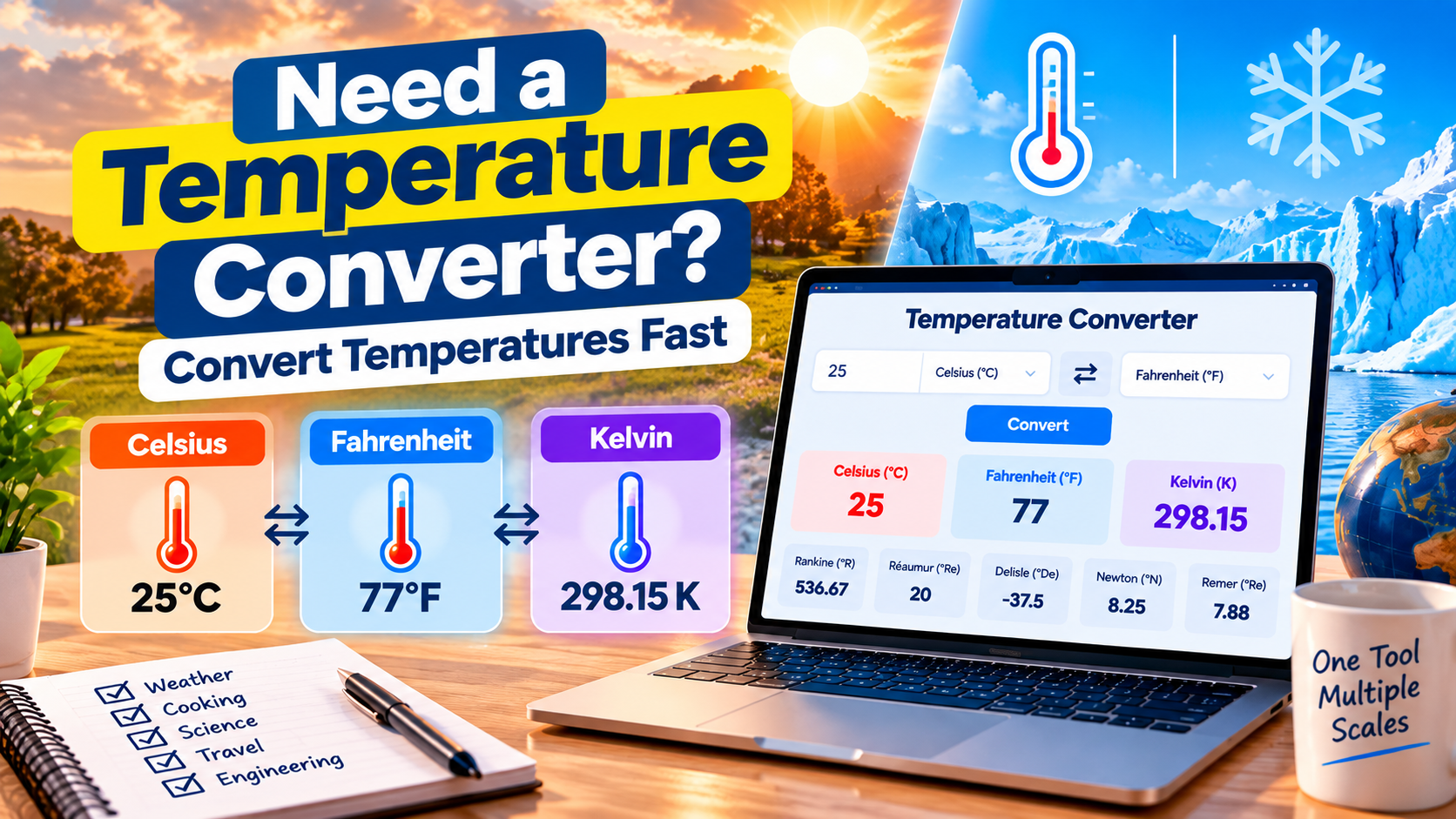
FreeWWW's Temperature Converter supports Celsius (°C), Fahrenheit (°F), Kelvin (K), Rankine (°R), Réaumur (°Ré), Delisle (°De), Newton (°N), and Rømer (°Rø). Enter a value, choose the source and target scales, and use the result with the precision you need.
For common conversions such as Celsius to Fahrenheit or Celsius to Kelvin, the underlying formulas are exact. The difference is that the displayed result may be rounded according to the selected decimal precision.
What Is a Temperature Converter?
A temperature converter is a calculator that changes a temperature measurement from one scale to another.
The three scales most people encounter are:
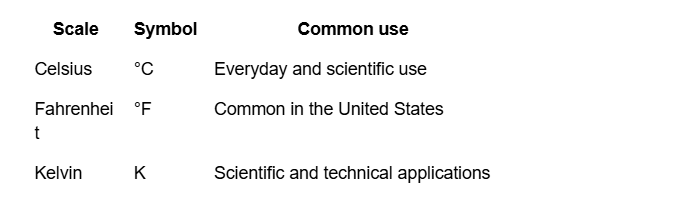
Celsius and Fahrenheit use different numerical reference points, while Kelvin is the SI base unit for thermodynamic temperature. The kelvin is written as K, rather than °K.
Why Are There Different Temperature Scales?
Different temperature scales use different reference points and units. Celsius is widely used for everyday measurements and much of the world’s scientific work, Fahrenheit remains common in everyday use in the United States, and Kelvin is the SI base unit for thermodynamic temperature.
The scales describe the same physical quantity, but their numerical values differ. For example, 0°C, 32°F, and 273.15 K describe the same temperature.
The physical temperature has not changed. Only the numerical representation has changed.
Quick Temperature Conversion Reference
0°C = 32°F = 273.15 K
25°C = 77°F = 298.15 K
37°C = 98.6°F = 310.15 K
100°C = 212°F = 373.15 K
−40°C = −40°F = 233.15 K
How to Convert Celsius to Fahrenheit
The Celsius-to-Fahrenheit formula is:
°F = (°C × 9/5) + 32
For example, suppose the temperature is 25°C.
25 × 1.8 = 45
45 + 32 = 77°F
So:
25°C = 77°F
The formula is exact, and NIST provides the same relationship in its temperature conversion guidance.
Using a temperature converter avoids having to perform this calculation every time.
How to Convert Fahrenheit to Celsius
The reverse conversion uses:
°C = (°F − 32) ÷ 1.8
For example:
86°F
First subtract 32:
86 − 32 = 54
Then divide by 1.8:
54 ÷ 1.8 = 30°C
Therefore:
86°F = 30°C
This conversion is particularly useful when reading weather information, recipes, equipment specifications, or educational materials that use a different temperature system.
How to Convert Celsius to Kelvin
Converting Celsius to Kelvin is straightforward:
K = °C + 273.15
For example:
25°C + 273.15 = 298.15 K
So 25°C corresponds to 298.15 K.
The reverse calculation is:
°C = K − 273.15
NIST identifies 273.15 K as the reference relationship between zero degrees Celsius and thermodynamic temperature.
How to Convert Fahrenheit to Kelvin
To convert Fahrenheit to Kelvin:
K = (°F − 32) × 5/9 + 273.15
Example:
68°F = 293.15 K
How to Convert Kelvin to Fahrenheit
To convert Kelvin to Fahrenheit:
°F = (K − 273.15) × 9/5 + 32
Example:
293.15 K = 68°F
NIST provides these relationships.
What Makes Kelvin Different?
Kelvin differs from Celsius and Fahrenheit because it is an absolute temperature scale. Its zero point, 0 K, is commonly called absolute zero.
The kelvin is the SI base unit for thermodynamic temperature. Its modern definition is based on a fixed numerical value of the Boltzmann constant.
Unlike Celsius and Fahrenheit, Kelvin values are written without a degree symbol:
300 K, not 300°K.
This distinction matters in scientific and technical writing.
Beyond Celsius, Fahrenheit, and Kelvin
Beyond the three most common scales, several historical temperature systems are still useful in specialized or educational contexts.
The FreeWWW tool also supports:
- Rankine
- Réaumur
- Delisle
- Newton
- Rømer
These scales are less common in everyday life but can appear in historical references, technical material, educational resources, or specialized calculations.
Having several scales available in one converter can be useful when working with unusual or older temperature references.
When Is an Online Temperature Converter Useful?
Manual formulas are helpful when learning how temperature scales relate to one another. But an online tool becomes convenient when you need repeated conversions or several results at once.
Common situations include:
- Checking weather temperatures
- Converting cooking temperatures
- Reading international instructions
- Studying physics or chemistry
- Comparing scientific measurements
- Working with engineering specifications
- Checking historical temperature data
For example, someone preparing a recipe written in Fahrenheit can quickly convert the oven temperature to Celsius without repeatedly applying the formula.
Why Precision Matters
Temperature conversions can produce decimal values, particularly when moving between Celsius, Fahrenheit, and Kelvin.
For scientific or engineering work, rounding too early can introduce unnecessary differences between calculations.
The FreeWWW converter includes configurable decimal precision, allowing users to choose how many decimal places appear in the result. It also provides conversion history and lets users copy results for convenient reuse.
A conversion formula can be exact while the displayed value is rounded. For example, a tool may calculate a result to many decimal places but display only two. The displayed precision should match the precision justified by the original measurement. A weather forecast may not require the same number of decimal places as a laboratory calculation.
Convert Temperatures Without Manual Calculations
Whether you're converting a recipe from Fahrenheit to Celsius, checking a scientific value in Kelvin, or working with a less common temperature scale, the right conversion depends on the scale you're starting with and the scale you need.
FreeWWW's Temperature Converter brings these conversions together in one place, with configurable decimal precision and other practical features. For everyday use, the common Celsius, Fahrenheit, and Kelvin conversions cover most needs; the additional scales are useful for specialized and historical references.
Ready to convert a temperature? Enter your value and get the result instantly.
FAQs
1. What is a temperature converter?
Answer: A temperature converter changes a temperature value from one measurement scale into another. Common conversions include Celsius to Fahrenheit, Fahrenheit to Celsius, and Celsius to Kelvin.
2. What is the formula for Celsius to Fahrenheit?
Answer: The exact Celsius-to-Fahrenheit conversion is °F = (°C × 9/5) + 32. For example, 20°C equals 68°F. NIST publishes the same exact conversion relationship. NIST
3. What is the formula for Fahrenheit to Celsius?
Answer: Use °C = (°F − 32) ÷ 1.8. For example, 68°F converts to 20°C. This formula reverses the Celsius-to-Fahrenheit relationship.
4. How do you convert Celsius to Kelvin?
Answer: Add 273.15 to the Celsius temperature. For example, 25°C becomes 298.15 K. The kelvin is the SI base unit of thermodynamic temperature.
5. What is 0°C in Fahrenheit and Kelvin?
Answer: Zero degrees Celsius equals 32°F and 273.15 K. These values represent the same temperature expressed using three different scales.
6. Why is Kelvin written without a degree symbol?
Answer: The SI unit is the kelvin, with the symbol K. It is written as 300 K, not 300 °K. The BIPM's SI guidance specifies K as the symbol for the kelvin. BIPM
7. Can I convert temperatures other than Celsius, Fahrenheit, and Kelvin?
Answer: Yes. The FreeWWW converter supports eight scales: Celsius, Fahrenheit, Kelvin, Rankine, Réaumur, Delisle, Newton, and Rømer.
8. Is Celsius to Fahrenheit conversion exact?
Answer: Yes. The relationship °F = (°C × 1.8) + 32 is an exact conversion between the scales. The displayed result may be rounded if fewer decimal places are selected.
9. When should I use Kelvin instead of Celsius?
Answer: Kelvin is commonly used for thermodynamic temperature in scientific and technical contexts. Celsius is generally more convenient for everyday temperatures because its scale is directly familiar in ordinary measurements.
10. Where can I learn more about temperature units?
Answer: The NIST temperature measurement guide explains Celsius, Fahrenheit, Kelvin, reference temperatures, and exact conversion equations.